
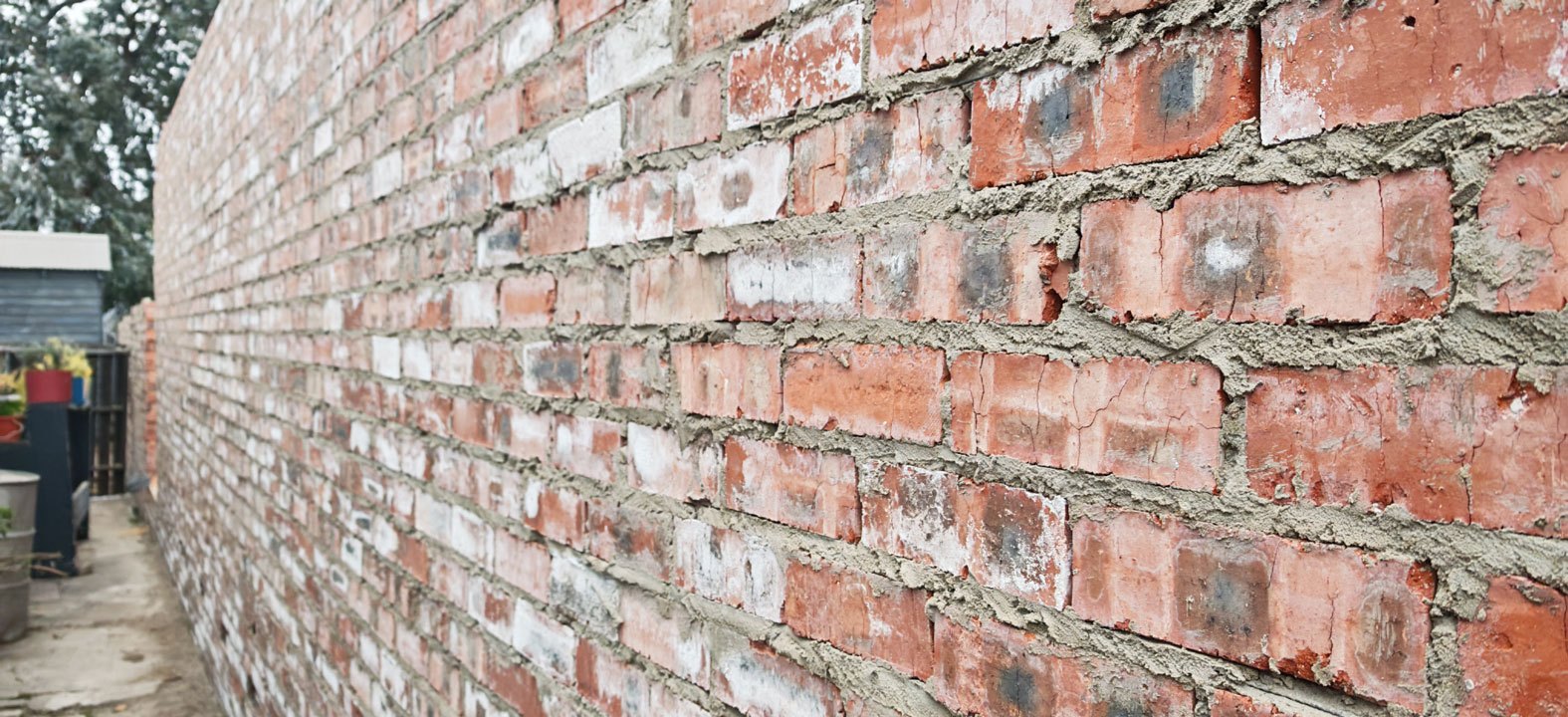
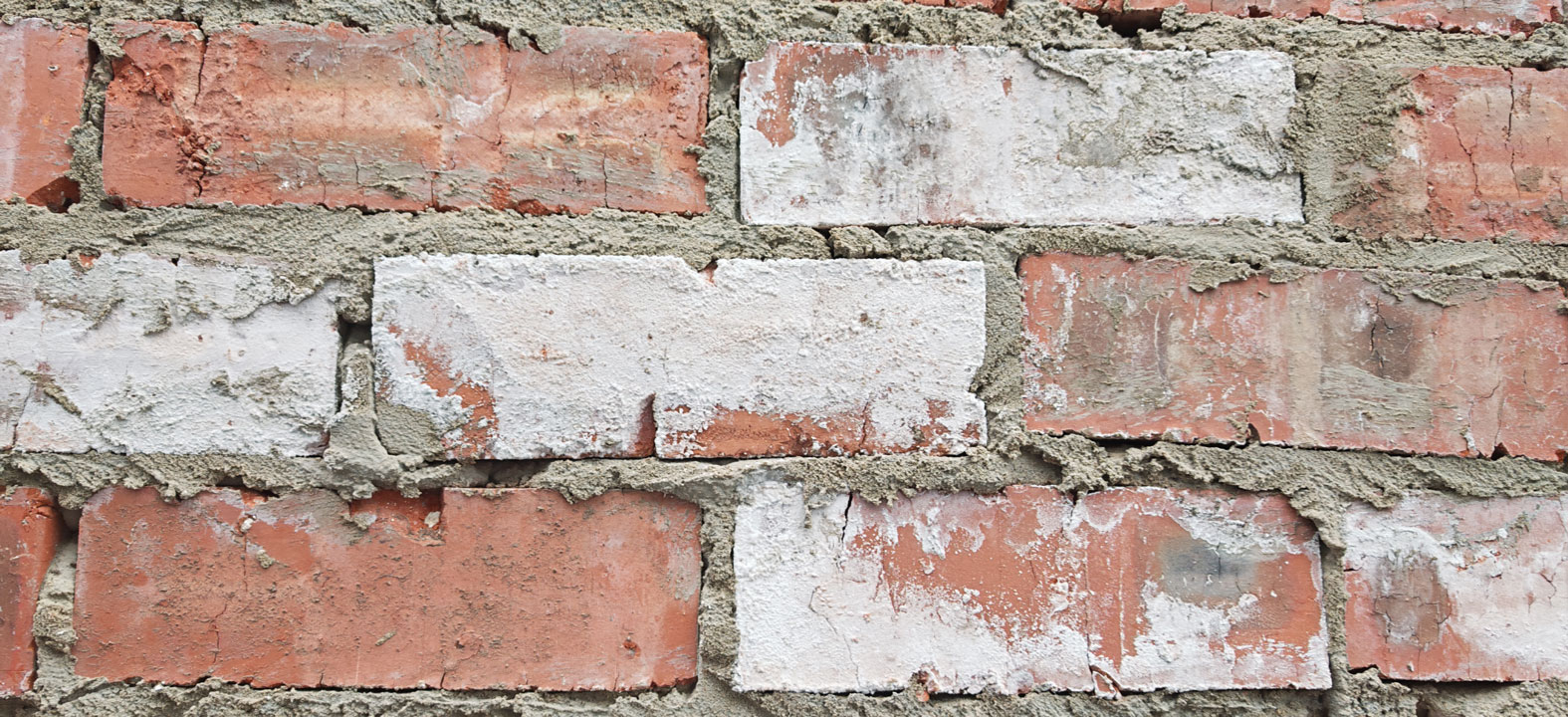
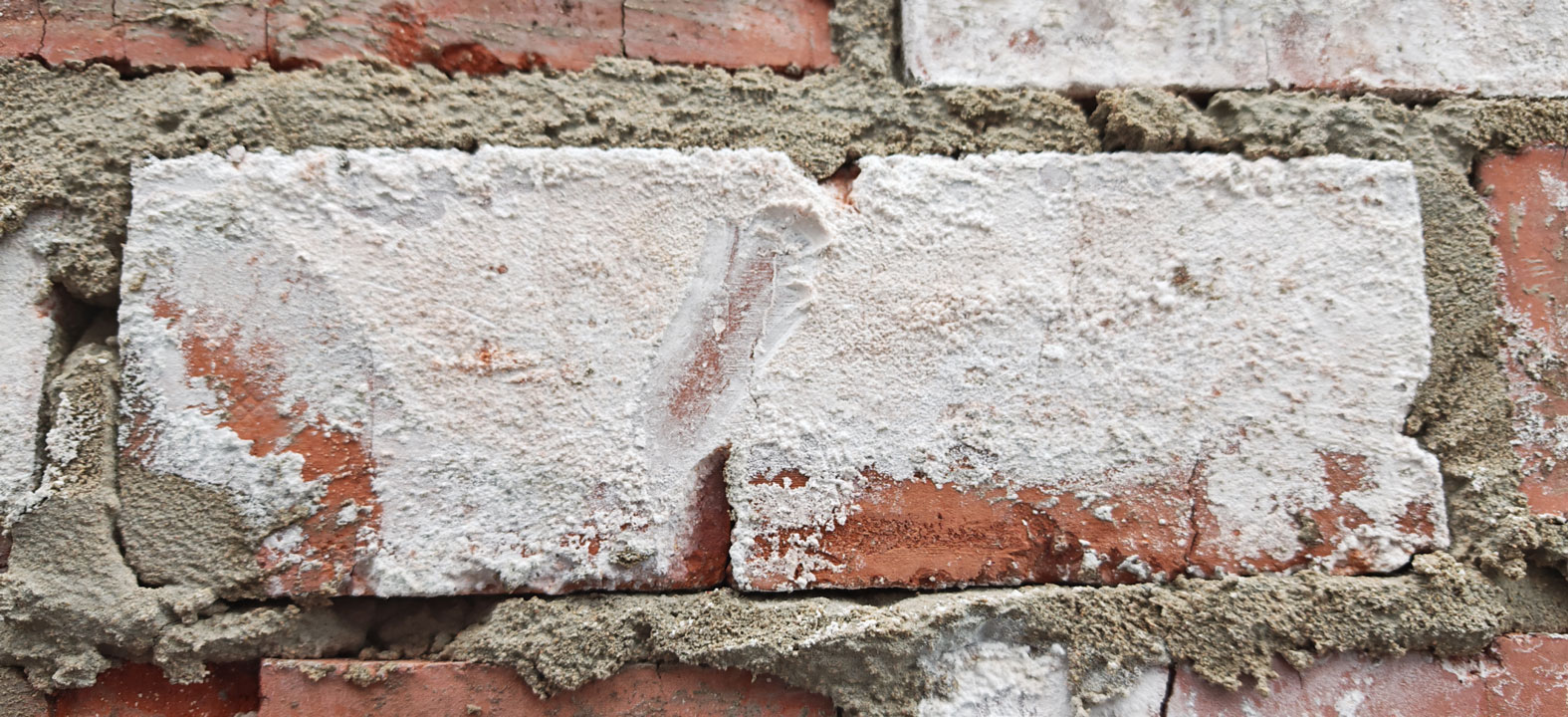
Efflorescence generally appears as a white deposit (although it may also be brown, green or yellow in colour) on the surface of clay and concrete masonry and concrete walls. It occurs when soluble salts in the concrete or mortar dissolve in moisture in the blockwork, brickwork or concrete and are then carried to the surface as the moisture migrates through. When the moisture evaporates, the salts remain as a residue on the surface.
White or grey efflorescence is likely to be a calcium, sodium or potassium salt originating mainly from the cement in mortar, grout or concrete. Calcium hydroxide (Ca(OH)2) is a common cause of efflorescence. Coloured efflorescence indicates vanadium salts and generally occurs on cream or light-coloured bricks. While efflorescence does not affect the performance of blockwork, brickwork or concrete, it is considered unsightly and spoils the appearance and peeling or blistering of paint on the wall.
Borrowed from French efflorescence, from Latin efflorescere, which was from ex- (“out”) + florescere (“to blossom”). It's called "efflorescence,"
and it's a crystalline deposit of salts often seen on the surface of concrete, brick, stucco or natural stone surfaces. It occurs when water leaves behind salt deposits and is present on or in the masonry surface. It traverses to the surface of brick walls including plastered walls.
This is a significant problem especially in Coastal Areas, although moisture in the walls could also be a problem.
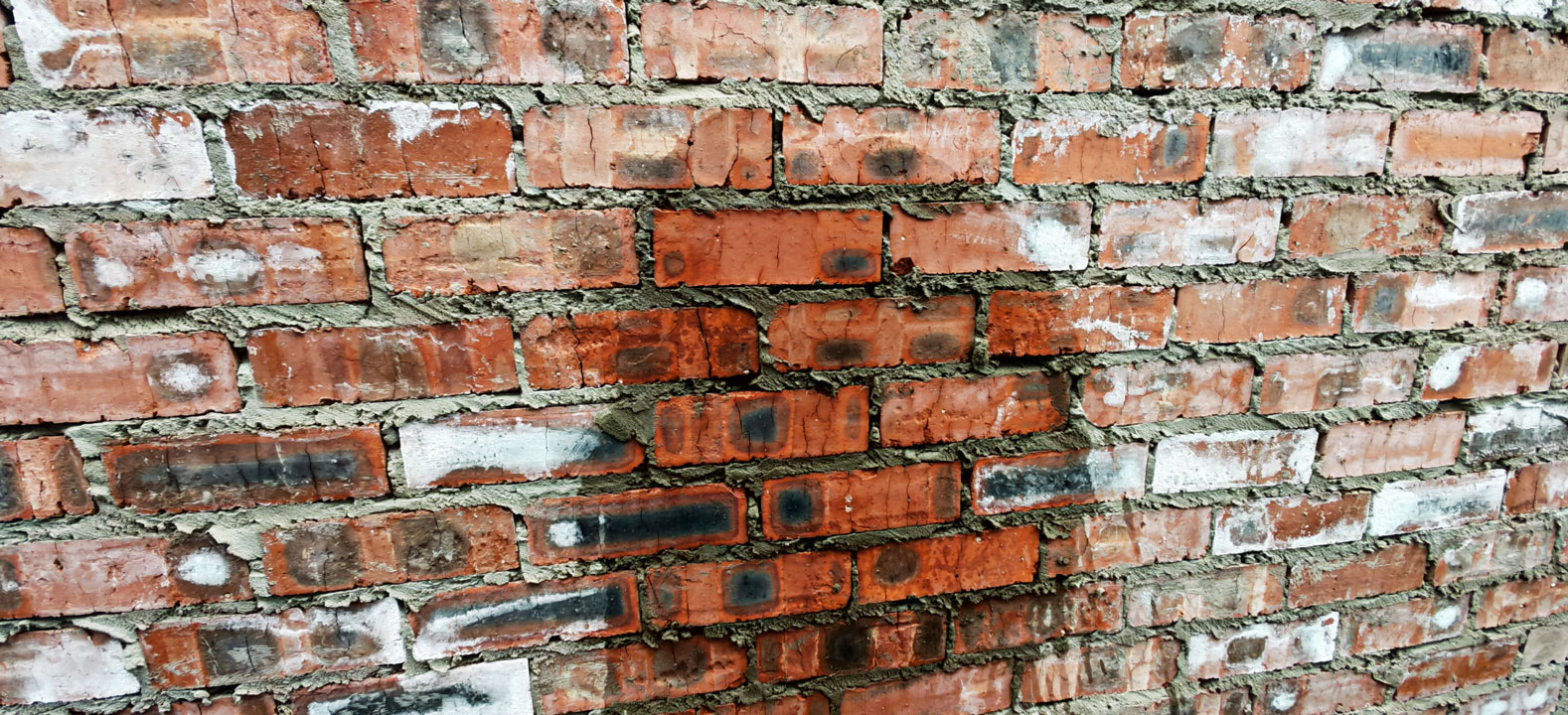
Efflorescence can occur on new masonry or concrete walls, as soluble salts tend to be present in the blockwork, concrete or mortar. The salts may come from a number of sources including:
the cement in masonry units, mortar, grout or concrete – cement contains up to 2% soluble salts
the atmosphere, for example, salt spray in coastal areas or atmospheric pollutants in industrial areas
water absorbed into masonry or concrete.
Three conditions are required for efflorescence to occur. There must be:
soluble salts present
moisture in the wall
evaporation of moisture.
A number of factors exacerbate the incidence of efflorescence such as:
masonry units not being protected before laying from rain or groundwater
masonry veneer walls not being protected from rain during construction and water entering the cavity
inadequate flashings at the top of walls
too much water in the mortar mix.
The salt condition should gradually decrease in two to three years, but will remain constant in wet walls. It is imperative that proper waterproofing be done to get the moisture out of the walls as the problem is from the inside out.
A. Existing Walls:
All visible salt vesicles must be broken open;
A firm nylon brush should be used;
It is important to place a plastic cover on the ground to collect the salt deposit, salt deposits falling on the ground are absorbed into the soil with rain or water and just return to the wall;
No water should be used to wash out the vesicles - it makes a solution and spreads again in the wall;
No high pressure device should be used - see 4.
Walls should be well sanded;
Cracks larger than 3mm must be opened and re-plastered with Classic Damp Slurry˜™ - smaller cracks can be Skimmed;
Walls should be washed with CLASSIC EFFLORESCENCE WASH™and rinsed thoroughly with water afterwards;
Cracks should be repaired with Classic Damp Slurry˜™
Hairline Cracks need only be covered with "Classiseal Primer".
After preparing the entire wall as in 1-8, a second layer "Classiseal Primer" must be used before applying two to three layers of "Classic Satin Sheen" or "Classic Super Acrylic".
It is always better to apply three thin coats than two thicker coats.
Walls should be washed with CLASSIC EFFLORESCENCE WASH™ and rinsed thoroughly with water afterwards;
Add Classifelx Mortar ADMix™ - 20% per Volume of Cement into Plaster;
One layer of "Classiseal Primer" must be applied;
When Plastered two coats "Classiseal Primer" must be applied;
Now two to three layers of "Classic Satin Sheen" or "Super Acrylic" can be applied.


B. Newly Build Walls
C. Walls on top
All walls on top should be sealed with a cementitious water proofing and painted as recommended in A. and B.